Mind the gap: What if Venezuelan ex-pats do go back home?
por Carlos Solis-Tejada
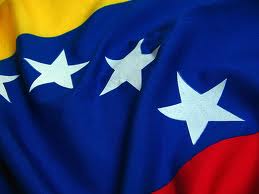 Hugo Chavez is dead and for many reasons, whether you are a “Chavista” or not, the importance of this event is not a minor issue. Although the real possibilities of a dismissal of Chavismo are a matter of debate it would be interesting to understand the impact of a change of regime would have in other countries. More interesting in my view would be if Chavismo proves to be rather than a personality cult, a deeply rooted political culture and system that could either take years of transition to change into something different like in post Franco Spain (or post-communist Eastern Europe) or perhaps it could evolve and further develop into something more like post Mao China.
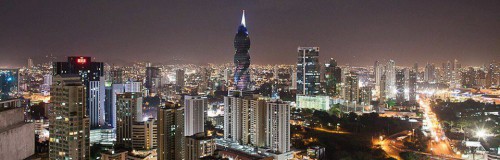
The outcome of events going on in Venezuela might be a matter of concern to its neighbours ….greater than they might imagine. Very few seem to be making themselves the million dollar question…Could real estate markets plummet in Miami or in Panama City if middle class Venezuelans moved back home or stopped leaving Venezuela?
Of course such a question is highly speculative and for some even a non-question as the probabilities of a such a massive return (or a stop to the exodus) could be considered rather slim…but what if? This is not a small question specially for places like Panama where the impact of Venezuelan immigrants has been greater than what their numbers might indicate (24,000 in a country of 3 million inhabitants) and perhaps than in any other country. This community is unique in being composed mostly of people of professional or business backgrounds with high levels of educational attainment which contributes greatly to social and economic development wherever they settle.
The economic input of Venezuelans either settling or just securing their money in Panamanian banks or business ventures is such that they constitute the third source of Foreign Direct Investments in the country. It could also be safe to say that Panama’s real estate boom quickly recovered its pace after the shock of the financial crisis slowed down the influx of North American and European baby-boomers partially thanks to the influx of Venezuelan home buyers and investors some even buying entire new developments.
It would also be interesting to know the impact of a return of the 70,000 Venezuelans living in Miami where their presence can be felt in the city, a slight reminiscence to the impact Cuban immigrants had in Miami after the Castro’s hijacked the Cuban Revolution. This is more so considering their contribution to an economy affected by the US Financial Crisis.
But there is no reason to worry, a recent survey showed that more than 95% of Venezuelans resident in the Miami surveyed said they had no intention to return even with a change of regime. After all, many have uprooted themselves from Venezuela and rebuilt their lives in the US, perhaps the same could be assumed of those who moved to Panama or elsewhere. Many migrants were young couples whose children have grown up to be like any local kid in their host country. Many have established prosperous businesses and careers therefore the human drama of starting all over again is just too great to bear especially when there is nothing waiting for them in the short term. But the question will always remain…what if? I would greatly appreciate your opinions bash me, trash me if you want but please leave your comments below
Carlos Solis-Tejada, holds an MSc in Urbanisation & Development from the London School of Economics and Political Science and is currently based in London.
 La Ciudad Espléndida
I would like to copy for the benefit of all the comments I’ve recieved in several forums:
Roger Bellido said: «I dont see any problem. Why should be that a problem. At least the market will level a little bit to the way it should be according to the trend we used to have before they arrived.
The Third World Observer: «I am no economist but my guess is that there should not be any problem as long as the government diversifies the economy in order to prevent an increase in unemployment if the real estate and construction markets loose pace in case we loose South American costumers and investors.»
Roger Bellido: «The economy and the construction market in Panama does not rely only on one market segment. Most of the high rise building built as condos are not intended only to Venezuelans nationals. The construction industry have been always worked in cycles and this one is diminshing in some segments. The construction industry might suffer and will loose pace after year 2015 when most of the big projects of this government should be finishing. It will depend on the new government if continue with the pace we have already by continuing with other macro projects such as the Linea 2 del Metro and other improvement in infrastructure.»
The Third World Observer: «I totally agree with you but just as a side note I would say that if we take the Venezuelan (and why not Colombian) factor out of the equation from 2009 to the present I would argue that even though those condos were not built just for them in mind, the recovery of the sector and thus the further extension of the typically shorter construction cycle especially in housing would have been much more difficult. I agree with you that there has been little done by the government to pre-empt any economic slump after the current construction rush is over. There are serious long term challenges to tackle in order to achieve a more diverse and dynamic economy basically increasing the educational level of attainment of Panamanians and developing the kind of skills that might help the country develop new industries, not just those that follow the old and unsustainable mantra of our national motto «pro mundi beneficio» Why conform ourselves to some kind of deterministic understanding of our destiny? Why just offer services? The financial and commercial sectors as well ad the construction sectors have very limited capacities to foster long term sustainable development. We need to think out of the box!»
Roger Bellido said: «My question here would be: should we, always, leave the developing of new industries in the country to the government in charge?? I think that this is also something that should be considered by the business class in Panama. What have been the trend of the industrial sector in Panama recently? Sure «we need to think out of the box» especially those people that in one way or another are «decision takers» in Panama.»
The Third World Observer: Absolutely! Ideally both should be very proactive in promoting a developmentalist ideology or culture. Unfor»tunately this is not the case for either the government or the private sector in Panama so far. They cozy themselves in their comfort zones I am pretty much of the opinion that 1. One or the other must come up with the initiative if not 2. Then we should hope for some external factor bringing in a developmentalist culture that might ignite new industries in the country.
Florence Lince, CITM said: «It will be interesting to watch won’t it. If the new President carries on his anti-American rant and to hurt the US he tells all those people from Venezuela to bring their money back home, there will be an interesting development.»
LuxmiH Eve-Lyn Forbes said: «Add a comment…What makes you think that they will go back> The face of leadership may have changed but the situation has not»
In the same vein Rolo Oyanguren said: «Hi Carlos,
I do not see an urban change happening to an after Chavez’ Venezuela. For openers, the country’s infrastructure has not changed after their departure, city traffic must have improved, etc. I see it more as a sociopolitical/anthropological issue if you may: Will city crime still be prevalent?, will the exodus continue?, and will the new leader change existing policies?, etc.»
TTWO: «I totally agree with you. I would just add that it all goes down to people’s resilience. It is not the first time exile groups go through the dilemma of returning especially refugees, political exiles and asylum seekers. Of course the Venezuelan case does not fit exactly in any of these categories it would has been more of a voluntary economic migration but one forced by internal political dynamics that made it unbearable to remain caused mainly by the ruling elite’s antipathy for the existing middle classes. Once the main cause of departure is gone (war, political situation, economic depression etc. in this case Chavez or hopefully Chavismo) it just depends on people’s attitude towards their country and their will to rebuild and start all over again that makes them return. So in the end is it might be a socio-psychological issue since the current material and social conditions might be changed with the help of those returning and the willingness of those who remained it requires certain openess and long term vision. If this has happened in more extreme situations worldwide what could make us think it could not be possible in Venezuela? I don’t know the answer, time will just tell. What do you think?»
David Makofsky said: «I agree with the major point of the article – it is not very easy for people, even wealthy, to move from one society to another. Also, the outcome of the elections in Venezuela are not certain.Actually, another leftist might win»
Sofia Spadafora said: «I agree with Roger completely, one of the problems with this country is that everyone expects the government to solve its problems. We need to move the economic power of this country from being solely centralized in the Panama city area. This country has so much more than just Panama city to offer the world but it requires bold people, visionaries willing to take take the first step and work hard to make the rest of the country as well-known as the capital. It takes a willingness to step out of comfort zones and start new industries that produce real wealth. Fortunately for Panama there are enough natural resources here to make this country very appealing to a large percentage of foreigners for a long time, but until education steps up and people get creative and enterprising (and that means starting with oneself) then the wealth of this country will never belong to itself and will forever be in the hands of multi-national companies. There is no excuse, a country gets the government it deserves.»
Justin Mason said: «I hope this is not too tangent to the thread, but I offer another way to consider the market impacts…
Will other parties decide to invest time, energy, and wealth into Venezuela [not just ex-pat Venezuelans]? I agree with the comment that ex-pats, already established in other countries, will tend to «stay put» because of economic and social conditions still present in Venezuela. We might want to consider the impact of leadership change on economic influx.
In the USoA, I believe we are currently facing the problem of bringing back economies that were exported around the world. It is difficult to re-tool the out-dated industrial centres, currently inhabited by more creative industries and artist communities. I believe it takes a creative approach to balance the growth of objective industrial production utilising low-skill workers vs. emergent technical industries employing creative/technical/higher-educated people.»
Dusty Tubbs said: «Carlos, I think it is all mindless worry. First off – how big is the Venezuela population in Panama? It is not 50%, nor 25%, not even 10% of the total population. A very small percentage of the property/home owners are from Venezuela. Will some of them return to their native homeland? Maybe, but it is still too early to know that. I believe that even if they do return to Venezuela they will probably not sell their property here in Panama. They will want to wait and see what happens in Venezuela. A lot of the Ex-Pats living in Panama still own property/homes in their native countries (and some other countries too). I do not believe you will see any changes in the local market. (Maybe in a few isolated condo buildings where a majority of owners are from Venezuela, but not otherwise.)
Sofia is 100% correct…stop waiting for the government to do everything. The other thing is the construction industry cannot grow exponentially forever. It is not sustainable! Sooner or later construction will slow down. What is going to happen once the new canal is completed? Where will all of those construction jobs/workers go? The small contractors will still be building new homes/building outside of Panama City and they will do well. But the big companies will have to downsize. This will impact the economy more than a few Venezuelans going home.
So lets look for that creative approach that Justin was writing about…»
Thanks so much for your comments. The whole idea of this post is as stated in my blog, to ask the if question. Probably it might be a pointless exercise but I still think it’s worthwhile to consider the impacts. In terms of impact in the current real estate market I don’t agree with the argument on population share. It would bee more important to know the composition of the new home-buyers by nationality in order to make a better assessment. Investors and buyers of new projects are in my mind the ones that keep fuelling the construction of new housing and commercial projects (which creates many direct and indirect jobs and business opportunities). If I had to make an educated guess new buyers and investors make not even 5% of the population. Out of this group we have many foreign buyers and perhaps without these buyers we might not even be discussing the real estate boom in Panama. Out of this group it would be interesting to know what is their composition by nationality, would it be exaggerate to guess Venezuelans perhaps make at least 25% of buyers? If so that explains those condos and new neighbourhoods full of them. Thus if they constitute a large chunk of those actually investing in new property then their sheer percentage in the general population might not be that relevant… more relevant could be their impact in the very sectors that keep pushing the market, the job creation and business opportunities. If they suddenly stop coming and buying due to some positive development back home…that might make a dent in the Panamanian economy. Whether it is a major or minor dent that might be a matter of debate.
Regarding who has to do what in order to diversify the economy. We have to be more pragmatic and objective, and ditch dogmatism. If there isn’t any innovative spirit within a given society it must be fostered if it takes governments or any other organisation to take the task so be it. Modern history shows us that the majority of societies that have prospered have done so thanks to the actions of its ruling elites through government to foster innovation and development and harnessing the entrepreneurial spirit that is innate in most human beings whenever they are in need. Governments through policy decisions create the laws, actions and infrastructure necessary for markets, industry and knowledge to flourish. Without a socio-political order that gives security, stability and confidence individuals will hardly invest, innovate or start new enterprises. So government action will always be needed regardless.
Roger Bellido •
said:» Carlos.
You know very well Panama’s political history. So with that in mind it is still very far to find a government in Panama that work as other societies in the «first world». So it still will be lead by the private sector.
The only one politician in Panama that could be really called an ‘estadista» was Berlisario Porras.
There is an anecdote attributed to President Porras. Someone asked him
– «Mr President what do Panama need to be like Switzerland?»
The president very seriously reply him back
– «Swiss people…»»
The Thirds World Observer: I would argue that we don’t need a «perfect» government to get things done. So far with the very imperfect ones we’ve had we have fared pretty well compared to other countries and other regions in the world. Those imperfect governments have set up the legal conditions and basic (but imperfect) services and infrastructure needed for the financial and commercial sectors to flourish in our country and have made us a high middle income country…quite a feat if you consider more than a century ago Panama was one of the most backward spots in Latin America,